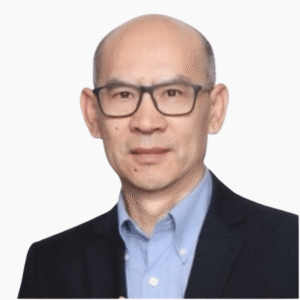
Guangzhou Han
Chief Scientific Officer RadAlliance Therapeutics Inc
Guangzhou Han, MD, PhD, is Chief Scientific Officer at RadAlliance Therapeutics, where he leads the discovery and translational development of next-generation radiopharmaceutical diagnostics and therapeutics. He has over 15 years of oncology R&D experience, with deep expertise in radioligand therapy, PET imaging, target selection, translational strategy, and early clinical development. Dr. Han previously held leadership roles at Full-Life Technologies and RayzeBio, where he contributed to radiopharmaceutical pipeline strategy and program advancement, as well as oncology R&D roles at Peloton Therapeutics and Pfizer Oncology. His work is dedicated to developing differentiated radiopharmaceutical platforms and advancing novel targeted agents from discovery to clinical translation.
Seminars
Experience a fast-paced debate, where isotope specialists will each present the strongest case for their radionuclide before joining a moderated discussion comparing clinical evidence, manufacturing readiness, supply considerations and commercial potential. Hear contrasting perspectives, challenge conventional thinking and take part in the discussion as the audience helps determine which isotope will define the next five years of TRP development.
- Comparing the scientific, clinical, manufacturing and commercial advantages of emerging isotopes including Actinium-225, Lead-212, Copper-67, Terbium, Astatine-211 and Lutetium-177
- Evaluating which radionuclides are best positioned to win across therapeutic efficacy, supply scalability, dosimetry flexibility, theranostic integration and global clinical applicability
- Challenging each isotope expert to defend why their radionuclide will become the hottest, most commercially impactful and most clinically transformative isotope over the next five years
- Exploring how target biology, ligand properties, radionuclide characteristics and disease context work together to shape radiopharmaceutical performance.
- Examining how molecular design and pharmacokinetics drive biodistribution, tumor retention, normal-organ exposure and ultimately therapeutic index.
- Sharing lessons from next-generation radiopharmaceutical programs on integrating these factors to design differentiated therapies with improved clinical potential.